
News
LHU and Dong Nai Provincial People’s Committee discuss strategic directions for high-tech development
Amid Dong Nai’s dynamic transformation toward high-tech industry and a knowledge-based economy, the demand for high-quality human resources and strong applied research capacity has become a key priority. More than educational institutions, universities serve as strategic partners of local authorities in shaping a sustainable development future.
In this spirit, on the morning of March 2, 2026, LHU had the honor of welcoming Mr. Le Truong Son, Vice Chairman of the Dong Nai Provincial People's Committee, along with representatives from the Department of Science and Technology, the Department of Education and Training, the Department of Industry and Trade, the Industrial and Economic Zones Management Board, and the Provincial Union of Science and Technology Associations for a working session to discuss long-term development orientations.
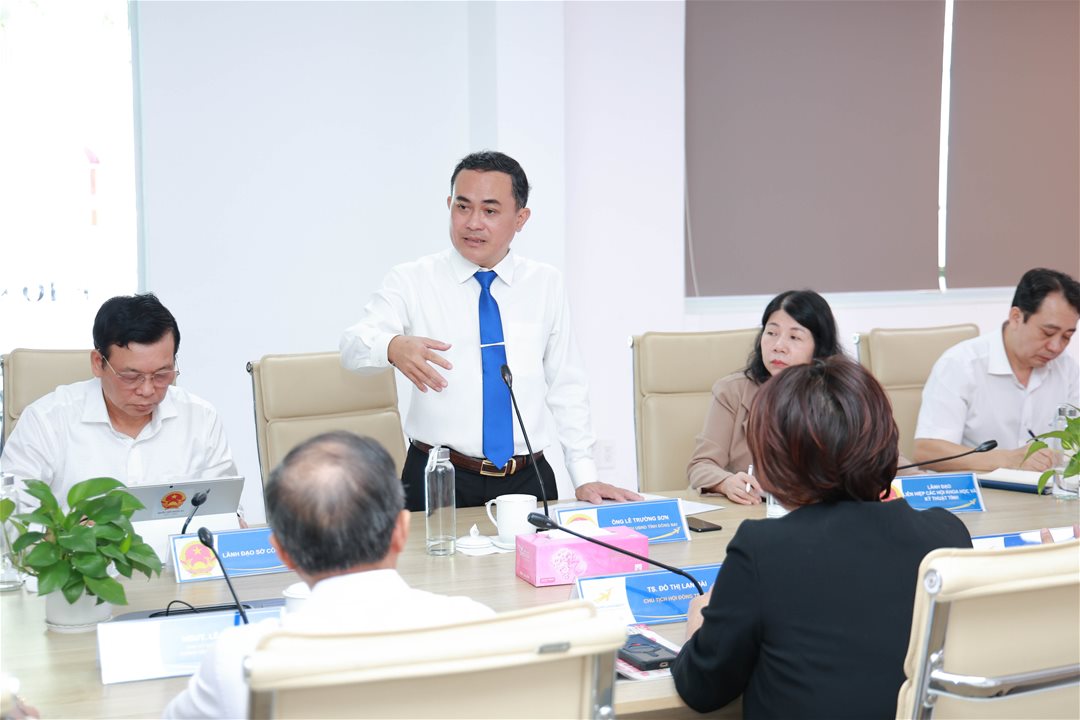
Mr. Le Truong Son, Vice Chairman of the Dong Nai Provincial People’s Committee, delivering directive remarks at the working session
Representing LHU at the meeting were Dr. Do Thi Lan Dai, Chairwoman of the University Council; Assoc. Prof. Dr. Lam Thanh Hien, Rector; members of the Board of Rectors; and leaders of affiliated units.
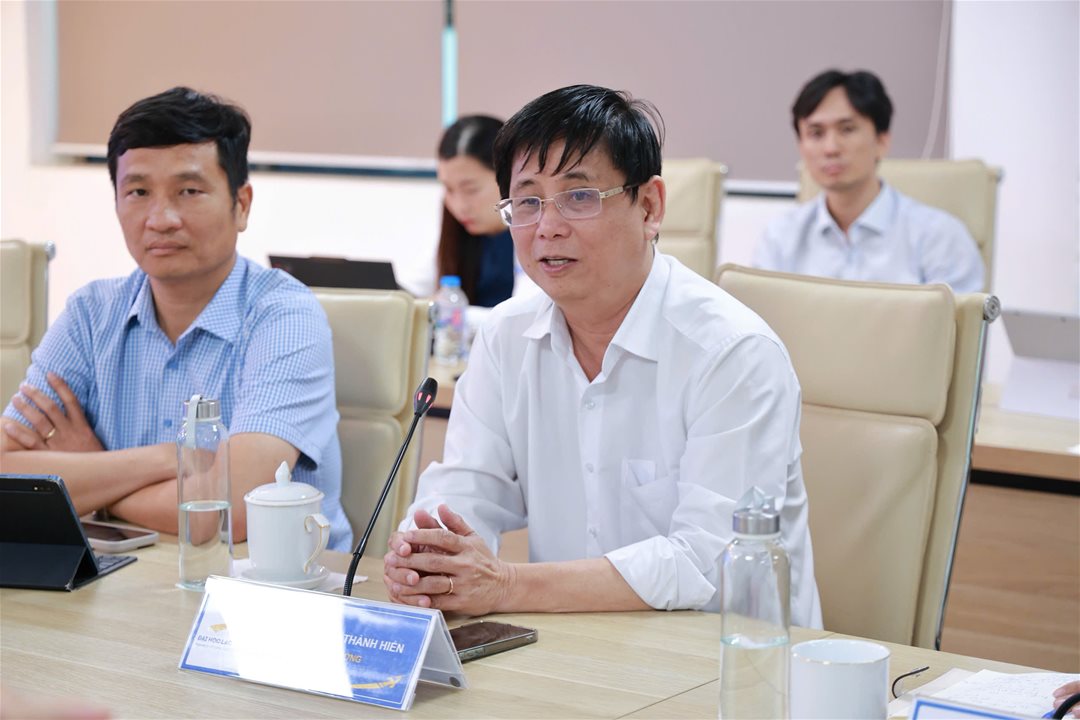
Assoc. Prof. Dr. Lam Thanh Hien, Rector of LHU extending his welcome at the program
During the session, LHU presented an overview of its development orientations for the new phase, focusing on key pillars: science and technology, digital transformation, semiconductor microchips, and the “triple helix” collaboration model linking Government – University – Enterprise. University representatives emphasized that in the high-tech era, a locality’s competitive advantage lies not only in physical infrastructure but also in its “intellectual infrastructure” - where engineers, experts, and researchers are trained and nurtured to contribute directly the province’s development.
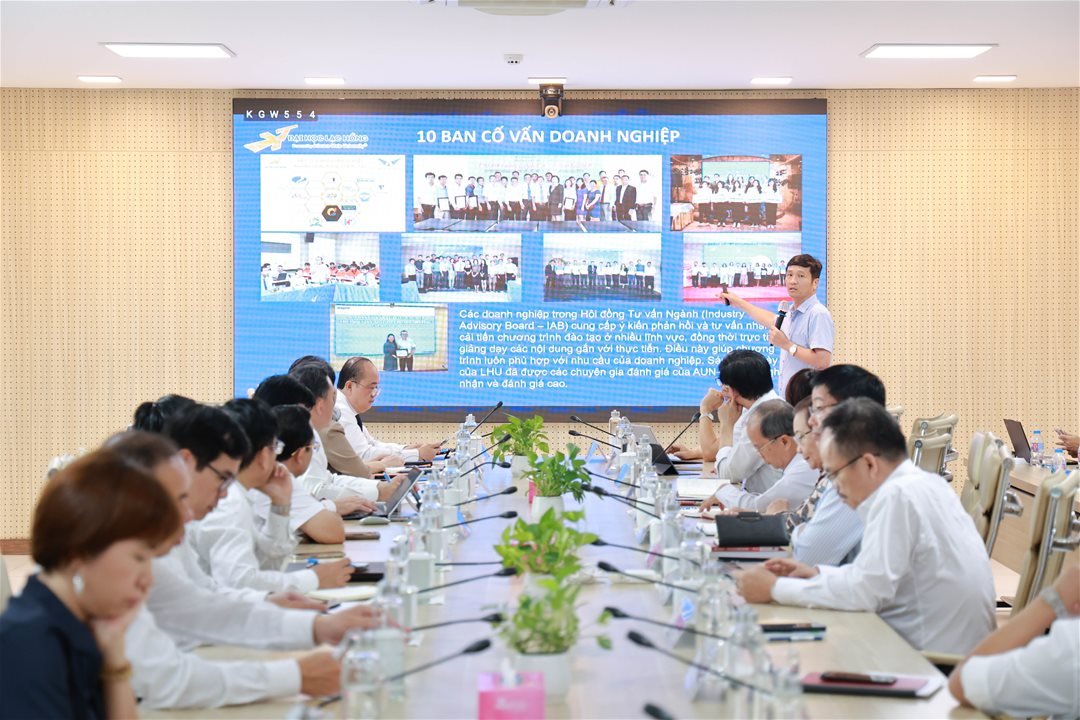
Assoc. Prof. Dr. Nguyen Vu Quynh, Vice Rector of LHU, presenting the “triple helix” strategy for developing human resources aligned with practical needs
In particular, strengthening the linkage between training and real-world production remains a core direction for the University. By enhancing partnerships with enterprises, integrating practical projects into academic programs, and investing in specialized laboratories, LHU is advancing toward an applied university model, thereby narrowing the gap between the classroom and the labor market.
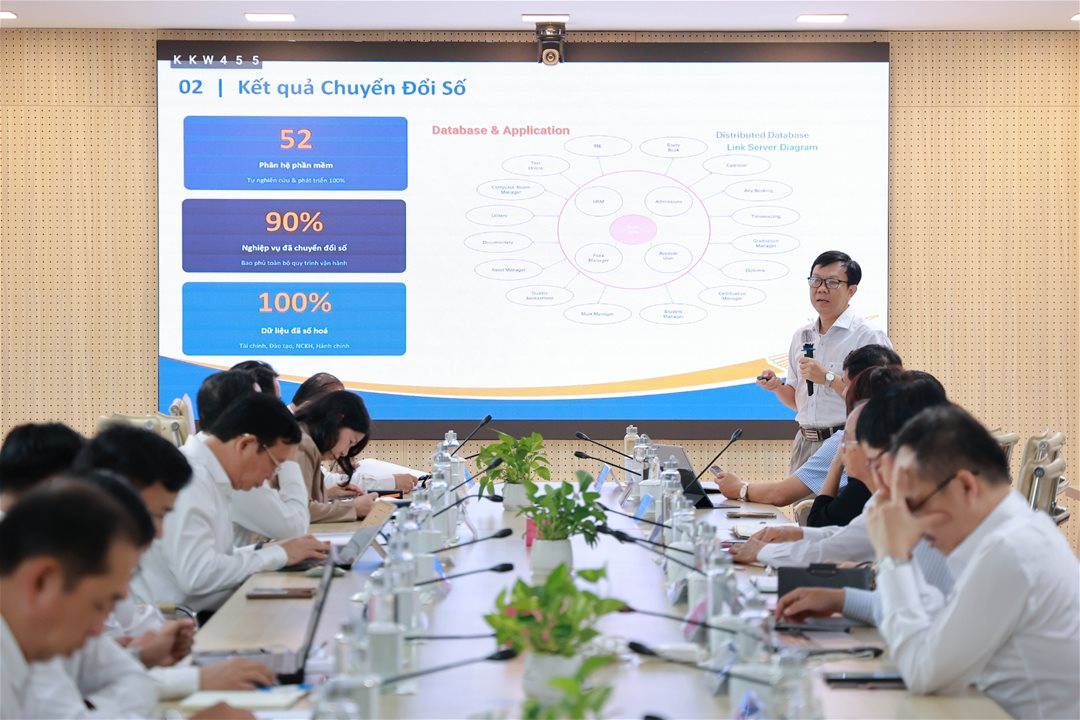
Dr. Huynh Cao Tuan, Vice Rector of LHU, outlining the University’s digital transformation initiatives
Addressing the working session, leaders of the Dong Nai Provincial People’s Committee acknowledged the University’s proactive and systematic approach in formulating development strategies aligned with the province’s overall orientation. They also expressed their expectation that LHU will continue to leverage its strengths in high-tech fields and make meaningful contributions to the province’s digital transformation, industrialization, and modernization.
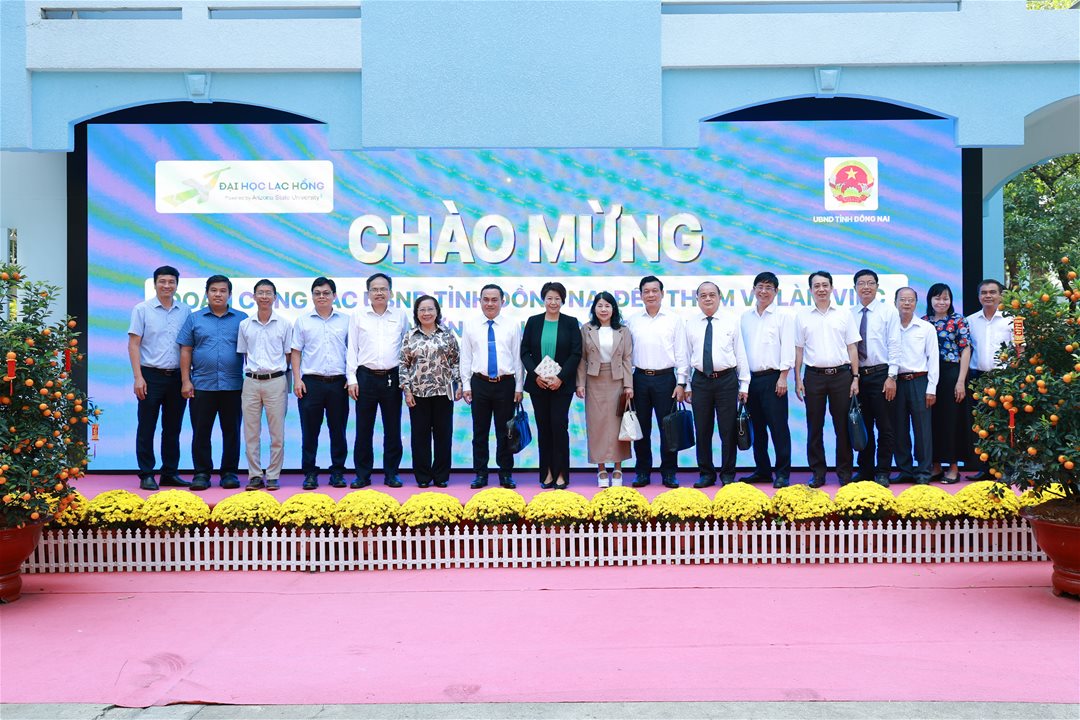
With a strategic vision, strong academic foundation, and a development orientation closely aligned with local practical needs, LHU reaffirms its role as a reputable institution for education and applied research, ready to accompany Dong Nai province on its journey toward sustainable development in the digital era.
LHU # high-tech # intellectual infrastructure # digital era # human resources
